


By Shihab Oruvil
Managing Director | Seagate Properties
Commercial Real Estate Expert Since 1998
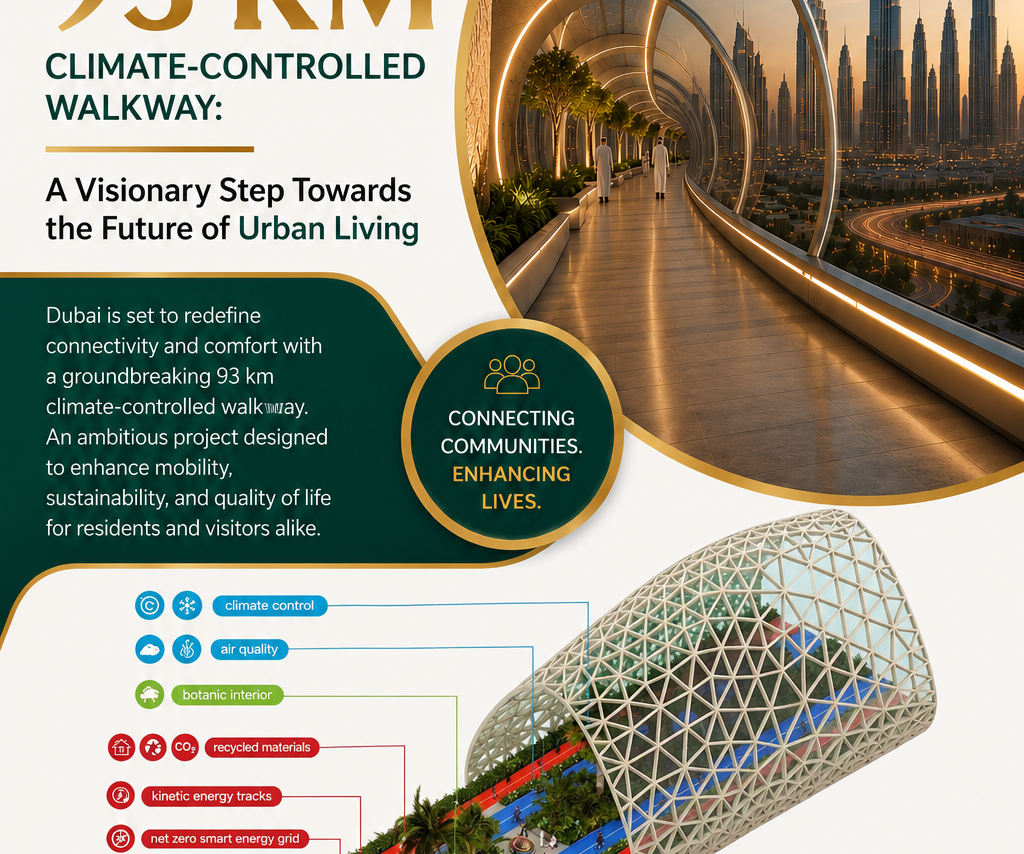
Dubai has once again demonstrated why it is recognized as one of the world’s most forward-thinking cities. The announcement of plans for a 93-kilometre climate-controlled pedestrian network represents more than an infrastructure project—it reflects a long-term vision for creating a healthier, smarter, and more sustainable urban environment.
For decades, Dubai has transformed ambitious ideas into reality. From the world’s tallest tower and one of the busiest international airports to a world-class metro system and innovative smart city initiatives, the emirate has consistently raised global standards. The proposed air-conditioned walkway network is another example of that visionary approach.
Redefining Urban Mobility
Walking is one of the healthiest and most environmentally friendly forms of transportation. However, in cities with extremely hot summers, pedestrian movement can be challenging for much of the year.
Dubai’s planned climate-controlled walkway network aims to change that by creating comfortable pedestrian corridors that encourage people to walk between residential communities, business districts, retail centres, transport hubs, and tourist attractions.
Such a project has the potential to redefine how residents and visitors experience the city.
Benefits Beyond Transportation
A connected pedestrian network offers benefits that extend far beyond mobility.
It can contribute to:
• Healthier lifestyles by encouraging daily walking.
• Reduced dependence on private vehicles.
• Improved connections with the Dubai Metro and public transport.
• Lower traffic congestion.
• Enhanced accessibility for families, senior citizens, and people of determination.
• Greater comfort during the summer months.
• Increased economic activity for retail outlets and restaurants located along the routes.
• A more vibrant and people-focused urban environment.
Cities around the world are investing in walkable infrastructure, but Dubai is taking the concept a step further by adapting it to its unique climate through innovative engineering.
A Positive Impact on Real Estate
As someone who has worked in Dubai’s real estate sector since 1998, I have witnessed how major infrastructure projects consistently influence property values and investment demand.
Every significant development—whether it was the Dubai Metro, new highways, waterfront destinations, or business districts—has improved accessibility and enhanced surrounding communities.
The proposed 93 km walkway network has the potential to deliver similar long-term benefits.
Properties located near key pedestrian corridors and connected transport hubs may become increasingly attractive to:
• Homeowners seeking greater convenience.
• Investors looking for sustainable long-term growth.
• Retail businesses benefiting from increased footfall.
• Hospitality operators serving tourists and business travellers.
• Commercial tenants prioritizing accessibility for employees and customers.
Infrastructure has always been one of the strongest drivers of real estate value, and projects that improve quality of life often create lasting investment opportunities.
Supporting Dubai’s Long-Term Vision
This initiative aligns with Dubai’s broader ambitions to become one of the world’s best cities to live, work, and visit.
The emirate continues to invest in sustainable development, smart technologies, efficient transportation systems, and high-quality public spaces. These initiatives support economic growth while improving everyday life for residents and visitors alike.
Creating a comfortable pedestrian experience also contributes to environmental sustainability by encouraging shorter journeys on foot and reducing unnecessary vehicle use.
A Global Benchmark for Future Cities
If successfully implemented, Dubai’s climate-controlled walkway network could become a global benchmark for urban design in regions with warm climates.
Many cities face the challenge of balancing rapid growth with sustainability and quality of life. Dubai continues to demonstrate that innovative planning, visionary leadership, and strategic investment can transform these challenges into opportunities.
The city’s ability to think beyond today’s needs is one of the reasons it continues to attract investors, entrepreneurs, businesses, and millions of visitors every year.
Final Thoughts
Great cities are built not only with iconic skyscrapers but also with infrastructure that improves the daily lives of people.
The proposed 93-kilometre climate-controlled walkway network is another example of Dubai investing in its future—a future focused on connectivity, sustainability, innovation, and human well-being.
As Dubai continues to evolve, projects like these reinforce its position as a global leader in urban development and create new opportunities across the real estate sector.
At Seagate Properties, we believe that understanding infrastructure trends is essential for making informed investment decisions. As the city grows, so do the opportunities for investors who recognize the long-term value of visionary development.
About Myself
Shihab Oruvil is the Managing Director of Seagate Properties and a Commercial Real Estate Expert with experience in Dubai’s property market since 1998. He specializes in commercial, industrial, residential, and investment real estate across the UAE, helping investors identify strategic opportunities through market knowledge and professional guidance.
Seagate Properties
Your Trusted Partner in UAE Real Estate Since 1998


Leave a Reply